
Skip to content
0
  • Home
  • Recent
  • Tags
  • Popular
  • World
  • Users
  • Groups
  • Home
  • Recent
  • Tags
  • Popular
  • World
  • Users
  • Groups
Skins
  • Light
  • Brite
  • Cerulean
  • Cosmo
  • Flatly
  • Journal
  • Litera
  • Lumen
  • Lux
  • Materia
  • Minty
  • Morph
  • Pulse
  • Sandstone
  • Simplex
  • Sketchy
  • Spacelab
  • United
  • Yeti
  • Zephyr
  • Dark
  • Cyborg
  • Darkly
  • Quartz
  • Slate
  • Solar
  • Superhero
  • Vapor

  • Default (Sketchy)
  • No Skin
Collapse

Wandering Adventure Party

John Carlos BaezJ

johncarlosbaez@mathstodon.xyz

@johncarlosbaez@mathstodon.xyz
About
Posts
10
Topics
4
Shares
0
Groups
0
Followers
0
Following
0

View Original

Posts

Recent Best Controversial

  • Here's a tale of how nature triumphs in the end.
    John Carlos BaezJ John Carlos Baez

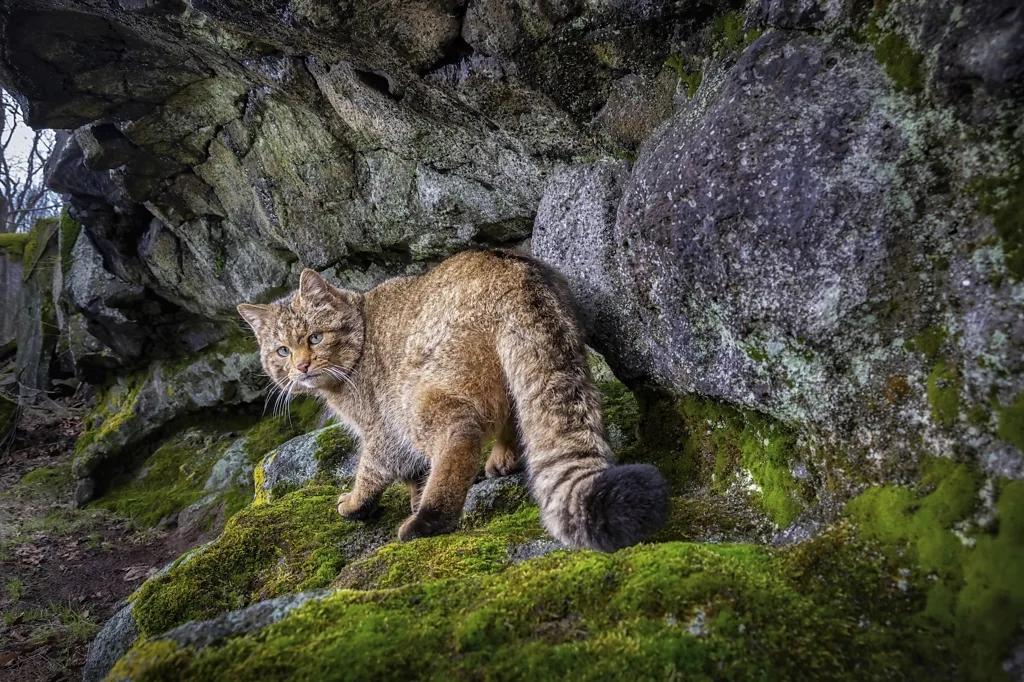
    @ClimateJenny - reminds me of how Felis silvestris is showing up in parts of Europe where human populations are declining.
    Link Preview Image
    John Carlos Baez (@johncarlosbaez@mathstodon.xyz)

    Attached: 1 image Some good news in a time of darkness: the European wildcat, Felis sylvestris, is making a comeback! This thoughtful-looking example was photographed in a mountainous region of the Czech republic. The European wildcat's extreme elusiveness may have helped it avoid hunters in places where a larger native cat, the lynx, has been killed off. There may be about 140,000 European wildcats spread across more than two dozen countries. But they are very hard to find! Wildlife photographer Andrea Giovanni, who made a video of one, writes: "I'd never even thought of taking photos of wildcats, for a simple reason: I thought it was impossible, or at least, extremely difficult. It's considered 'the ghost of the forests' because it's very, very elusive, and it's hard to predict where it can be spotted. Other animals tend to follow the same trails through the forest. The wildcat goes wherever she wants to." One reason the European wildcat is coming back is increased legal protections. But another is that villages in Italy and other regions are becoming depopulated! Some are very worried about declining human populations. But it does make room for other species. That gives me some hope for the future. I got this picture, taken by Vladimír Čech Jr in the Doupov mountains, from a very nice article on the European wildcat: https://www.bbc.com/future/article/20260112-rare-images-of-europes-ghost-cat For more on this species: https://en.wikipedia.org/wiki/European_wildcat Seven subspecies have been demarcated! #cats #catsOfFedi #catsOfMastodon

    favicon

    Mathstodon (mathstodon.xyz)

    Uncategorized

  • Here's a tale of how nature triumphs in the end.
    John Carlos BaezJ John Carlos Baez

    @blogdiva - yeah, it's full of deep points. You'd probably enjoy the longer version I linked to, if you haven't already read it.

    Uncategorized

  • Here's a tale of how nature triumphs in the end.
    John Carlos BaezJ John Carlos Baez

    @hardly - sure thing! I've never been to the Calumet region.

    Uncategorized

  • Here's a tale of how nature triumphs in the end.
    John Carlos BaezJ John Carlos Baez

    @ClimateJenny @arisummerland - it's possible that in the long run, fighting invasive species is a losing battle in most cases. Maybe it's better to just let succession take place: often the first stages of succession involve scrappy species that can survive tough conditions, while later a more complex ecosystem develops. But I'm no expert. I just agree with both of you that plants tends to know more about these issues than people.

    Uncategorized

  • Here's a tale of how nature triumphs in the end.
    John Carlos BaezJ John Carlos Baez

    @quoidian - thanks! The ethics of "invasive species" will need to be rethought as we go deeper into the Anthropocene and "pristine nature" becomes a thing of the past. This book looks interesting!

    Uncategorized

  • Here's a tale of how nature triumphs in the end.
    John Carlos BaezJ John Carlos Baez

    Ecologist Alison Anastasio visited a former US Steel South Works site in Chicago. She expected to find “all crap plants” — common invasive weeds. To her surprise she spotted little bluestem and three species of native milkweed. She already knew she didn't want a career as an academic scientist. But she came up with the idea of forming a group to study this ecosystem: “a dream team of people I wanted to work with.”

    She knew Laura Merwin from the University of Chicago, and later she met Lauren Umek, a project manager for the Chicago Park District. She invited them to brunch to pitch her idea to research plants growing on slag. Not for any obvious career goal. Just from sheer curiosity.

    Merwin and Umek were excited to join her project - which she called a “reverse side hustle,” since it involved a lot of work, but didn't make any money: it actually costs money.

    And thus the Slag Queens were born.

    Their first paper, “Urban post-industrial landscapes have unrealized ecological potential,” was published in Restoration Ecology in 2022. It argues that slag fields don't need to be fixed. They have ecological value in and of themselves. And land managers should forget whatever ecosystem was there before. Instead, they should look to more exotic ecosystems as a guide, like the dolomite prairies of Illinois, where magnesium-rich rock near the surface makes it hard for ordinary plants to thrive. Slag too is rich in magnesium.

    The Slag Queens are continuing their revolutionary work even now! For more, start here:

    • Carrie Gous, The beauty of slag, https://mag.uchicago.edu/science-medicine/beauty-slag

    Some of what I just wrote is a paraphrase of this article.

    (2/2)

    Uncategorized

  • Here's a tale of how nature triumphs in the end.
    John Carlos BaezJ John Carlos Baez

    Here's a tale of how nature triumphs in the end.

    Steel mills dumped molten slag in parts of Chicago and nearby areas. The slag hardened in layers up to 5 meters deep. These places became barren wastelands. Other industries dumped hot ash and cinders there.

    But eventually the steel mills closed.

    The deep layers of hard, toxic material were not friendly to plants. Cottonwoods are usually 30 meters tall or more. In the slag fields, stunted cottonwoods grow to just 2 meters.

    But rare species that could handle these conditions began to thrive. The lakeside daisy, a federally threatened species lost to Illinois for decades, turned out to grow taller on slag than on topsoil! The capitate spike-rush, last recorded in Illinois in 1894 and considered locally extinct, was rediscovered growing on slag.

    And more! Native prairie grasses like little bluestem. Native milkweeds. Even tiny white orchids called sphinx ladies' tresses.

    A team of women ecologists began studying these unusual landscapes. They call themselves the Slag Queens.

    (1/2)

    Uncategorized

  • The time is back to nanosecond accuracy at the National Institute of Standards and Technology!
    John Carlos BaezJ John Carlos Baez

    The time is back to nanosecond accuracy at the National Institute of Standards and Technology!

    Link Preview Image
    Final update on Dec. 19 incident at Boulder site

    favicon

    (groups.google.com)

    Uncategorized

  • Beavers are really important.'nAfter the huge wildfires in Oregon in 2022, a biologist went out to survey the damage.
    John Carlos BaezJ John Carlos Baez

    Beavers are really important.

    After the huge wildfires in Oregon in 2022, a biologist went out to survey the damage. Not only were the forests blackened, thriving trout populations in the streams were gone, choked to death by ash. “I was in total shock. It just looked like devastation.”

    Then he stumbled upon something even more surprising: roughly five acres of pristine greenery in an otherwise burned-out area! At the center were eight active beaver dams.

    But this was more than a refuge from the fire. While fish had disappeared upstream of these dams, the downstream water was crystal clear — and trout were thriving as though the fire had never happened! The beaver dams were acting as a water treatment plant.

    [Paraphrased from this article: https://www.scientificamerican.com/article/beaver-dams-help-wildfire-ravaged-ecosystems-recover-long-after-flames-subside/]

    Uncategorized

  • If you don't have a subscription to the Wall Street Journal, you can read a free version of this essay here:
    John Carlos BaezJ John Carlos Baez

    If you don't have a subscription to the Wall Street Journal, you can read a free version of this essay here:

    archive.is

    favicon

    (archive.is)

    This quagmire is getting bigger. It's another part of what William Gibson recently called the Singularity of Stupid.

    Uncategorized
  • Login

  • Login or register to search.
Powered by NodeBB Contributors
  • First post
    Last post