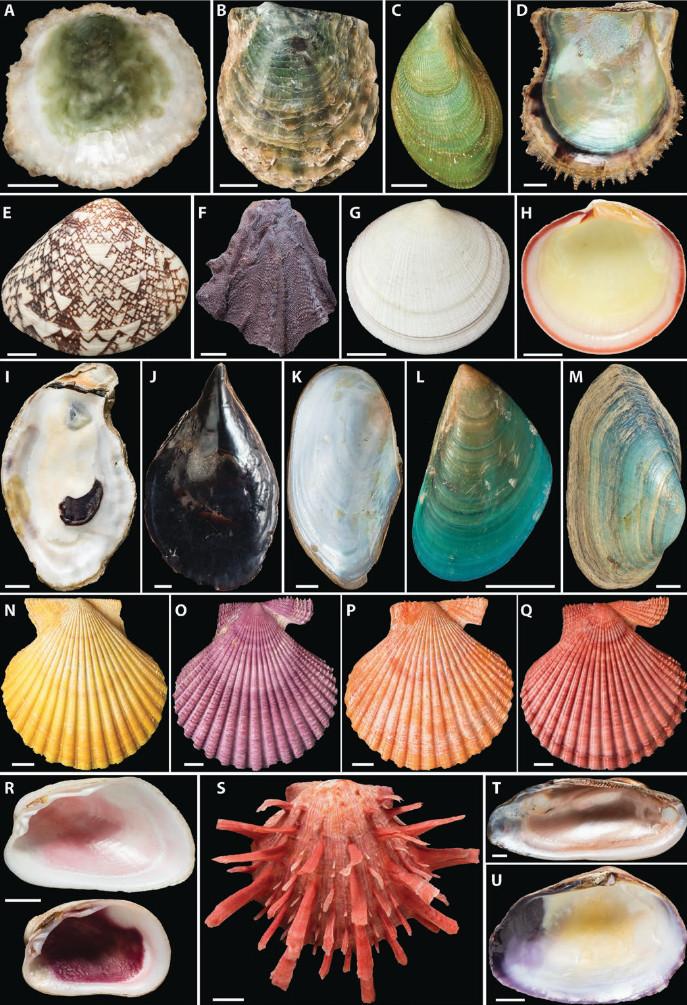
Bivalve shells are often colored, either by optically active pigments in the crystal structure of the shell itself, or by the protein layer on top (periostracum) being colored. Yellow and brown are most common, with green and blue being most unusual. As with birds and insects, blue pigment is very difficult to achieve, so in bivalve shells is more often generated via structural coloration! #clamFacts
 D
D