Often when I read complicated RPG rules I think to myself, "There is no way that this is actually playable at the gaming table.
-
@zdl @mrundkvist I always chalk it up to me not having a ton of experience with a wide variety of systems. I assume that there is probably a good reason to add mechanics for roleplaying but, in the back of my mind, it always feels so strange.
@crabsoft @mrundkvist I do have a ton of experience with a wide variety of systems. It feels "strange" to me too. (I'd use stronger language, honestly.)
-
I wouldn't have been able to come up with that much flavour if you gave me a week to create a map settlement.
It gets easier with practice. But yeah, random generators like this are a great starting point.
-
Though places reinvent themselves often enough. Take #Oldenburg , where I live - it used to be a remote provincial town for centuries when it belonged to the Danish crown, but in the 19th century it became the seat of a Ducal court, which had a massive impact on the character of the city.
@juergen_hubert
I've been thinking about that "Rationale for the Village’s Existence" thing. It seems very American to me, like something out of a Western movie. Or perhaps something from the German Ostsiedlung period of 1150-1350. It assumes that adventures are set in a wilderness with only a few recent settlements. And they're named "Grayson's Freehold" etc.Similar to how Americans think that a house from 1930 is super old and possibly haunted!

-
@juergen_hubert
I've been thinking about that "Rationale for the Village’s Existence" thing. It seems very American to me, like something out of a Western movie. Or perhaps something from the German Ostsiedlung period of 1150-1350. It assumes that adventures are set in a wilderness with only a few recent settlements. And they're named "Grayson's Freehold" etc.Similar to how Americans think that a house from 1930 is super old and possibly haunted!
@juergen_hubert
In northern European #history and #archaeology, I guess we assume that the Rationale for the Village’s Existence is a combination of two things:* Population pressure in 800 BC
* Availability of agricultural land -
@crabsoft
Or it's a yearning to do another kind of work than functional RPG design. Akin to coding a physics engine for video games.@mrundkvist @crabsoft It really depends on what the system pretends to be simulating. Most of the heavy rules crunch RPG design is attempting to be a physics engine, which is a fool's errand.
Trying to simulate physics with a high-speed computational platform is hard enough that there are specialized several hundred thousand lines of code designed for a machine that can think a lot faster than a human being to do. That still falls short.
It doesn't matter how many pages fit in the book, you're not going to simulate physics. Yet, they keep trying.
But there are other things to simulate. Some mechanical systems attempt to simulate the structure of stories via mechanical aids, and those can actually be quite small because when you're talking about fictive narrative space, the rules can be relatively abstract. The interpretation engine is the human brain, and we're used to telling stories to one another.
Rules-minimal systems tend to be narrativist because narrative rules are simpler to express.
-
It gets easier with practice. But yeah, random generators like this are a great starting point.
@juergen_hubert @GracelessHippo @mrundkvist
It also gets a lot easier/effective, once you‘ve entered those tables into obsidian and thus are able to generate all of that with a single click, on the fly. Quite a bit of work setting it up, but very rewarding. Still working on it atm.
-
@juergen_hubert
I've been thinking about that "Rationale for the Village’s Existence" thing. It seems very American to me, like something out of a Western movie. Or perhaps something from the German Ostsiedlung period of 1150-1350. It assumes that adventures are set in a wilderness with only a few recent settlements. And they're named "Grayson's Freehold" etc.Similar to how Americans think that a house from 1930 is super old and possibly haunted!
@mrundkvist @juergen_hubert "Americans think a hundred years is a long time. Europeans think a hundred miles is a long way."
-
@juergen_hubert
I've been thinking about that "Rationale for the Village’s Existence" thing. It seems very American to me, like something out of a Western movie. Or perhaps something from the German Ostsiedlung period of 1150-1350. It assumes that adventures are set in a wilderness with only a few recent settlements. And they're named "Grayson's Freehold" etc.Similar to how Americans think that a house from 1930 is super old and possibly haunted!
I think this _was_ written by an American, and the setting does follow D&Desque fantasy conventions - which have a bunch of "Wild West" tropes.
That being said, I am not too bothered by this. The random rolls are always just a _starting_ point for me, and creative reinterpretations to make them a better fit for the setting are part of the exercise.
-
@juergen_hubert @GracelessHippo @mrundkvist
It also gets a lot easier/effective, once you‘ve entered those tables into obsidian and thus are able to generate all of that with a single click, on the fly. Quite a bit of work setting it up, but very rewarding. Still working on it atm.
@Morgunin @GracelessHippo @mrundkvist
Useful, though I personally prefer to switch it up and use a bunch of different random generators throughout the worldbuilding process.
-
@Morgunin @GracelessHippo @mrundkvist
Useful, though I personally prefer to switch it up and use a bunch of different random generators throughout the worldbuilding process.
@juergen_hubert @GracelessHippo @mrundkvist
Nothings stops you from getting the individual results and recombining them as needed.
I enjoy using books more than computers, but they’re just not very portable
-
@juergen_hubert
In northern European #history and #archaeology, I guess we assume that the Rationale for the Village’s Existence is a combination of two things:* Population pressure in 800 BC
* Availability of agricultural land@mrundkvist
I think there are a few more. The peat swamps in the border region north Netherlands/Germany were developed only once peat became economically interesting (17th c?). The developments were owned by capitalists from the urban region (Holland) so not only was development late, the socio-economics were also special.
Another are the regions with poor, sandy soil. The virgin forest was cleared very late and even then I think pasture of sheep remained more important there.
@juergen_hubert -
@mrundkvist
I think there are a few more. The peat swamps in the border region north Netherlands/Germany were developed only once peat became economically interesting (17th c?). The developments were owned by capitalists from the urban region (Holland) so not only was development late, the socio-economics were also special.
Another are the regions with poor, sandy soil. The virgin forest was cleared very late and even then I think pasture of sheep remained more important there.
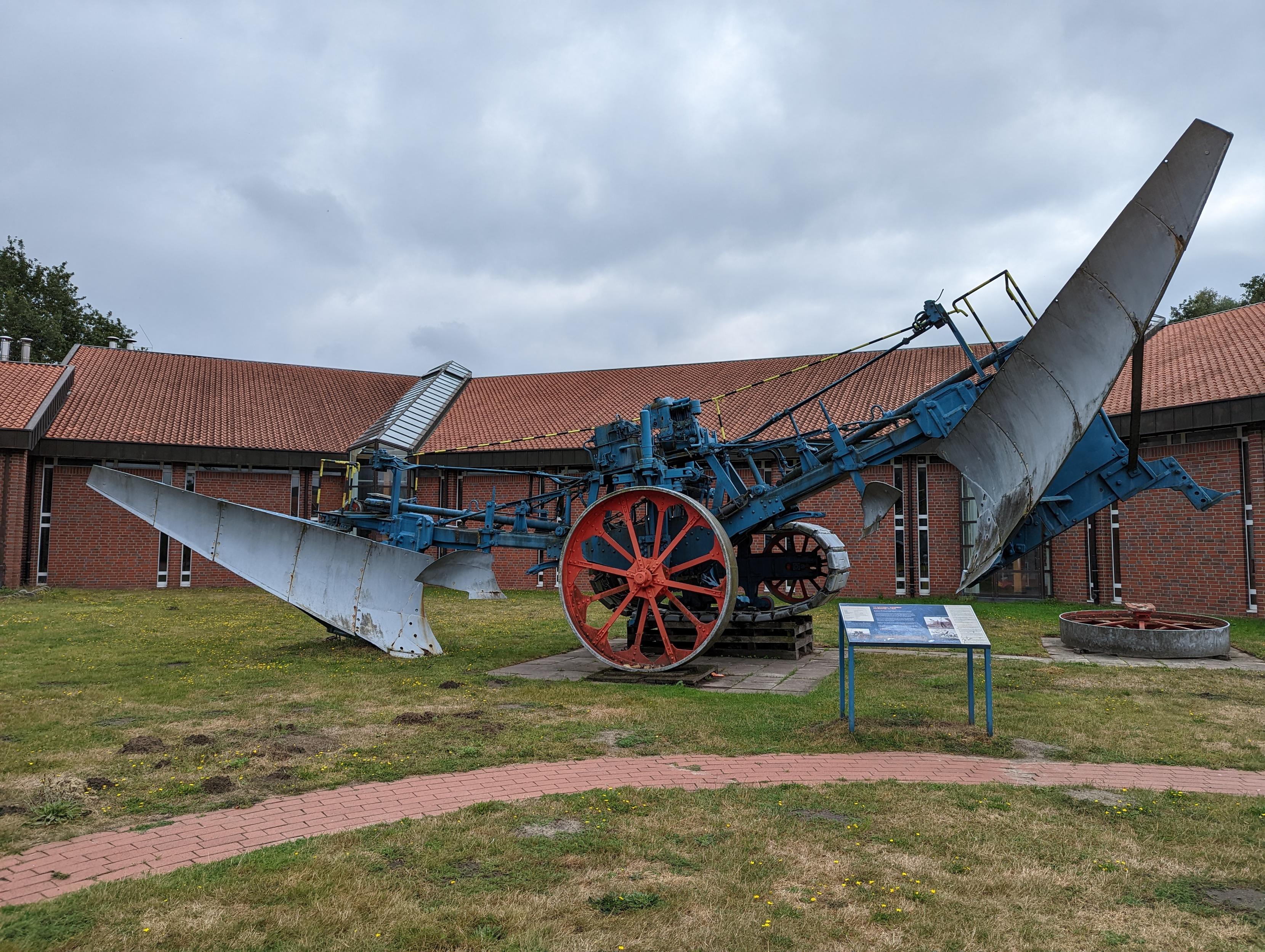
@juergen_hubertYeah, in the Oldenburg area in northwestern Germany where I live there are actually quite a few villages that were founded in the 19th century, when all those boglands were plowed by giant steam plows.