I can’t stop laughing at this headline.'n'n“Nvidia beats earnings expectations, even as bubble concerns mount.”'n'nRead that again.
-
I can’t stop laughing at this headline.
“Nvidia beats earnings expectations, even as bubble concerns mount.”
Read that again. Slowly. Let it marinate.
Because the article itself basically says:
- Nvidia obliterated earnings.
- Demand is through the roof.
- Guidance is even higher.
- Profits are up 65%.
- GPUs are sold out everywhere.
…but apparently the bubble is… mounting?
It’s the same energy as:
“The house isn’t on fire. In fact, the house is now made of reinforced steel. But concerns about fire hazards continue.”
This is the absurdity baked right into the narrative: the strongest possible evidence that nothing is collapsing… presented beside a storyline that requires everything to be collapsing.
The data disproves the headline. Yet the headline soldiers on anyway.
And the article even helps make it ridiculous:
- “Blackwell sales are off the charts.”
- “Cloud GPUs are sold out.”
- “The spending spree isn’t slowing anytime soon.”
- “Nowhere near its peak.”
So what we’re really reading is:
“Nvidia crushed it—again—but we’re legally obligated to keep the bubble plotline alive.”
This is exactly the disconnect I’ve been pointing out for two weeks.
Sentiment screaming one thing. Fundamentals calmly doing the opposite.
And really? This headline proves the point better than anything I could’ve written.
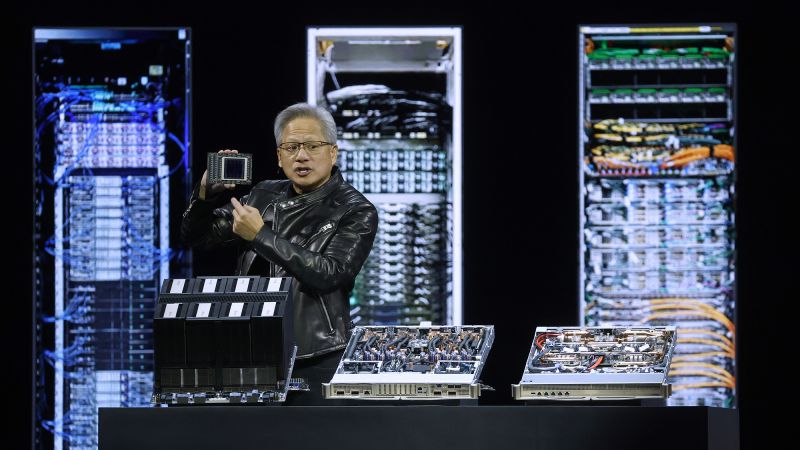
Nvidia beats earnings expectations, even as bubble concerns mount | CNN Business
Nvidia posted strong revenue and profits that exceeded Wall Street’s expectations Wednesday. The closely watched result could prompt a sigh of relief across the stock market following growing concerns about an artificial intelligence bubble.
CNN (www.cnn.com)
-
I can’t stop laughing at this headline.
“Nvidia beats earnings expectations, even as bubble concerns mount.”
Read that again. Slowly. Let it marinate.
Because the article itself basically says:
- Nvidia obliterated earnings.
- Demand is through the roof.
- Guidance is even higher.
- Profits are up 65%.
- GPUs are sold out everywhere.
…but apparently the bubble is… mounting?
It’s the same energy as:
“The house isn’t on fire. In fact, the house is now made of reinforced steel. But concerns about fire hazards continue.”
This is the absurdity baked right into the narrative: the strongest possible evidence that nothing is collapsing… presented beside a storyline that requires everything to be collapsing.
The data disproves the headline. Yet the headline soldiers on anyway.
And the article even helps make it ridiculous:
- “Blackwell sales are off the charts.”
- “Cloud GPUs are sold out.”
- “The spending spree isn’t slowing anytime soon.”
- “Nowhere near its peak.”
So what we’re really reading is:
“Nvidia crushed it—again—but we’re legally obligated to keep the bubble plotline alive.”
This is exactly the disconnect I’ve been pointing out for two weeks.
Sentiment screaming one thing. Fundamentals calmly doing the opposite.
And really? This headline proves the point better than anything I could’ve written.
Nvidia beats earnings expectations, even as bubble concerns mount | CNN Business
Nvidia posted strong revenue and profits that exceeded Wall Street’s expectations Wednesday. The closely watched result could prompt a sigh of relief across the stock market following growing concerns about an artificial intelligence bubble.
CNN (www.cnn.com)

Nvidia, OpenAI, and the trillion-dollar loop
Feature: How to build a trillion-dollar industry: Step 1, invest in your customers. Step 2, sell them stuff
(www.theregister.com)
-
Nvidia, OpenAI, and the trillion-dollar loop
Feature: How to build a trillion-dollar industry: Step 1, invest in your customers. Step 2, sell them stuff
(www.theregister.com)
Christopher :coffefied: I’m going to repeat what I said elsewhere:
I’m not saying there isn’t an AI bubble. I’m saying there’s no imminent threat of one popping right now. My job is to identify when sentiment and fundamentals misalign—and over the past two weeks, they’ve been completely out of sync.
That said, here’s why I don’t buy the idea that “all the money is just being circuitously re-invested into each company.”
The main players aren’t fragile startups passing the same dollar around. They’re mature companies with enormous cash-producing cores. Microsoft prints money from Windows and enterprise software. Google prints money from Search. Nvidia prints money from GPUs. Amazon prints money from e-commerce and AWS. These businesses would continue operating even if their AI efforts vanished tomorrow.
On top of that, they’re sitting on mountains of cash. And when you’ve got that kind of cash flow, you have to put it somewhere. Sure, they can issue dividends or buybacks—and they do. But if all they ever do is return cash, shareholders eventually ask a simple question: “What are you doing to grow?”
They can also let the cash pile up. But again, shareholders will ask for their cut.
So the logical next option is to invest in an emerging technology. And right now, AI is the emerging technology with the clearest demand signal. It’s the sector that, if it breaks open, reshapes everything. None of these companies want to be the one that missed the platform shift.
And just to be clear—tech giants don’t have to pour their capital into AI. Meta dumped $70B into the metaverse. Nvidia tried cloud gaming. Apple released… a sock. They all experiment. They all diversify.
Capital isn’t recirculating in a closed loop. It’s flowing toward the only part of the tech ecosystem that’s actually generating outsized demand.
-
Christopher :coffefied: I’m going to repeat what I said elsewhere:
I’m not saying there isn’t an AI bubble. I’m saying there’s no imminent threat of one popping right now. My job is to identify when sentiment and fundamentals misalign—and over the past two weeks, they’ve been completely out of sync.
That said, here’s why I don’t buy the idea that “all the money is just being circuitously re-invested into each company.”
The main players aren’t fragile startups passing the same dollar around. They’re mature companies with enormous cash-producing cores. Microsoft prints money from Windows and enterprise software. Google prints money from Search. Nvidia prints money from GPUs. Amazon prints money from e-commerce and AWS. These businesses would continue operating even if their AI efforts vanished tomorrow.
On top of that, they’re sitting on mountains of cash. And when you’ve got that kind of cash flow, you have to put it somewhere. Sure, they can issue dividends or buybacks—and they do. But if all they ever do is return cash, shareholders eventually ask a simple question: “What are you doing to grow?”
They can also let the cash pile up. But again, shareholders will ask for their cut.
So the logical next option is to invest in an emerging technology. And right now, AI is the emerging technology with the clearest demand signal. It’s the sector that, if it breaks open, reshapes everything. None of these companies want to be the one that missed the platform shift.
And just to be clear—tech giants don’t have to pour their capital into AI. Meta dumped $70B into the metaverse. Nvidia tried cloud gaming. Apple released… a sock. They all experiment. They all diversify.
Capital isn’t recirculating in a closed loop. It’s flowing toward the only part of the tech ecosystem that’s actually generating outsized demand.
Its actually worse looking it up. Turns out that Nvida isn't selling GPU's to OpenAI, they're leasing them to OpenAI. I would put the quotes up, but it runs into my charter limit.
Go to the "Echoes of the dotcom era" part.

How much of the AI boom is underpinned by Nvidia's own balance sheet? Investors increasingly are asking. | Fortune
Nvidia's big investments in various customers are generating echoes of past booms and busts.
Fortune (fortune.com)
-
Its actually worse looking it up. Turns out that Nvida isn't selling GPU's to OpenAI, they're leasing them to OpenAI. I would put the quotes up, but it runs into my charter limit.
Go to the "Echoes of the dotcom era" part.
How much of the AI boom is underpinned by Nvidia's own balance sheet? Investors increasingly are asking. | Fortune
Nvidia's big investments in various customers are generating echoes of past booms and busts.
Fortune (fortune.com)
@Christopher The funny thing about markets is that the numbers always tell the truth—it’s the sentiment that lies through its teeth.
And right now, you’re reacting to sentiment, not fundamentals. Nvidia just posted one of the strongest quarters in corporate history, and instead of recalibrating to reality, you’re chasing the emotional leftovers from two straight weeks of “AI bubble apocalypse” headlines.
That’s why this suddenly feels “worse.” Not because the situation is actually fragile, but because fear is doing cartwheels trying to stay relevant after the fundamentals embarrassed it. So the moment someone whispers “leasing” or “circular financing,” people latch onto it like it’s a revelation instead of what it really is: noise.
What matters isn’t how spooky something sounds. What matters is what the books say. And the books are screaming a very different story than the vibes.
You’re letting sentiment drag you around by the collar. -
I think you're misunderstanding the fundamentals here.
Nvidia hasn't sold anything, they're leasing the GPU's to OpenAI on-top of the $100 billion investment. If OpenAI goes bust tomorrow. Then Nvidia will be stuck with worthless GPU's and a financial liability of $100 billion on their books, cancelling out their profits.
If you read the article, Nvidia isn't the bubble, OpenAI is, Nvidia is exposed, and the fear is if companies like OpenAI goes bust, it can take companies like Nvidia down with them.
-
@Christopher The funny thing about markets is that the numbers always tell the truth—it’s the sentiment that lies through its teeth.
And right now, you’re reacting to sentiment, not fundamentals. Nvidia just posted one of the strongest quarters in corporate history, and instead of recalibrating to reality, you’re chasing the emotional leftovers from two straight weeks of “AI bubble apocalypse” headlines.
That’s why this suddenly feels “worse.” Not because the situation is actually fragile, but because fear is doing cartwheels trying to stay relevant after the fundamentals embarrassed it. So the moment someone whispers “leasing” or “circular financing,” people latch onto it like it’s a revelation instead of what it really is: noise.
What matters isn’t how spooky something sounds. What matters is what the books say. And the books are screaming a very different story than the vibes.
You’re letting sentiment drag you around by the collar.I think you're misunderstanding the fundamentals here.
Nvidia hasn't sold anything, they're leasing the GPU's to OpenAI on-top of the $100 billion investment. If OpenAI goes bust tomorrow. Then Nvidia will be stuck with worthless GPU's and a financial liability of $100 billion on their books, cancelling out their profits.
-
If you read the article, Nvidia isn't the bubble, OpenAI is, Nvidia is exposed, and the fear is if companies like OpenAI goes bust, it can take companies like Nvidia down with them.
Christopher :coffefied: I think you’re crossing the wires here. My post was about Nvidia, so when you said “it’s actually worse,” I assumed you were talking about their fundamentals. But nothing you’re describing appears anywhere on Nvidia’s books—and the article you’re citing was written before today’s earnings beat everything in sight, which doesn’t exactly strengthen the case.
OpenAI? Sure, they might be a bubble. Maybe they’re overextended. Maybe their valuation is duct-taped together. I have no idea. Nobody does. They’re not public. I can’t see their balance sheet, their burn rate, or their actual liabilities.
And that’s precisely the point: I can’t scrutinize OpenAI. I can scrutinize Nvidia.